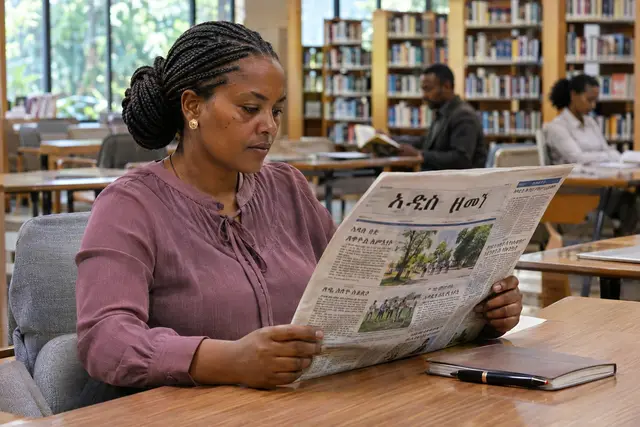
Tadias Magazine is a diaspora magazine about Ethiopia, launched in 2003 and based in New York. A directory of Ethiopian titles describes it as an English-language magazine of the Ethiopian diaspora, written for readers in North America and beyond. Profiles describe a digital publication aimed at the Ethiopian-American community, offering news, events, videos, interviews, sport, arts, entertainment and opinion. Its co-founder Tseday Alehegn is named as editor, and the brand has grown beyond online articles into live events, community projects and merchandise.
Founding and base in New York
Tadias was launched in 2003, according to a profile on the website Music in Africa, which places it in New York in the United States. A college profile of the editor adds that the magazine was started as a digital publication to fill a need for news and information among Ethiopian Americans, and names Tseday Alehegn as co-founder and editor.
The decision to publish online from the start was unusual in 2003, when most diaspora publications still depended on printed newsletters sold at churches and restaurants. A web magazine could carry photographs, event notices and interviews, and could be read in Addis Ababa, Washington, Minneapolis or London on the same day.
The name is an Amharic greeting, a casual way of saying hello, and it signals the informal, community tone the editors wanted to set.
Language and format
A web directory of Ethiopian newspapers also records the magazine under its address tadias.com. English is the natural choice for a magazine aimed at readers who grew up in the United States, who often speak Amharic at home but read and write mainly in English.
The format is that of a digital magazine rather than a newspaper. Articles are posted continuously and grouped by category, such as news, events, arts, profiles and opinion, and each post carries a date and an author line. There is no fixed print schedule.
Photographs and video are central. The site covers concerts, gallery openings, fundraisers, marathons and cultural festivals with image galleries, and it posts interviews recorded with artists, entrepreneurs and public figures.
Content and sections
The profile on Music in Africa lists the range of material: original news, events, videos, interviews, sports, arts, entertainment, personality profiles, celebrity highlights and opinion. It adds that Tadias also republishes relevant material from larger news networks.
The balance leans toward culture and community life rather than hard politics. A typical week might include a report on an Ethiopian designer at a fashion show, a note on a book launch, news of a diaspora business award and an obituary of a community elder.
- Arts and music: concerts, exhibitions, new albums and film screenings.
- Community: scholarships, charity drives, religious and national holidays.
- Sport: Ethiopian runners, marathons and football teams.
- Profiles: entrepreneurs, professionals, students and public figures.
This focus gives the magazine a record value for historians of diaspora culture, who need sources that document everyday achievements as well as crises.
Audience and reach
The audience is the Ethiopian-American community, together with Ethiopians elsewhere in the diaspora and friends of Ethiopia. A college news item reports that the magazine reached about 33,000 unique visitors a month at the time of writing and expanded into live events and merchandise. This figure is the publisher's own and is not independently audited.
Community magazines like Tadias build loyalty by being present at events. Their editors attend openings and cultural nights, and their coverage helps organisers reach new audiences. In return, advertisers and sponsors, including airlines, banks and community groups, pay for visibility.
Diaspora media compared with the home press
Within Ethiopia the press is divided between state-owned titles and a small private sector. A study of 2017 counted thirteen newspapers, four owned by the state and nine private. Diaspora magazines fall outside those figures, but they influence how Ethiopia is seen abroad.
The difference lies in aims. A home newspaper must manage licensing and the defamation risks of the 2008 media proclamation, number 590/2008, while a magazine in New York answers to American law and to its community. This freedom allows commentary but not necessarily deeper reporting, because it lacks reporters inside the country.
The magazine's emphasis on civic engagement and press freedom, noted in the college article, shows how diaspora outlets often adopt an advocacy role without becoming partisan organs.
Ownership and independence
Tadias is run as an independent small publisher, with its editor named as co-founder. The sources checked give no list of investors, no staff figures and no financial data, so the business structure cannot be described in detail.
What is documented is the model: free access to articles, revenue from advertising and sponsorship, and side activities such as events and branded products. This mix is common among independent digital magazines in the United States and keeps the title independent of political parties and of the Ethiopian state.
How to read and cite it
The magazine is read on its website. Because the web address redirects between secure and ordinary connections, some browsers display warnings. The directory listing remains a stable way to reach the title.
When citing, give the date of the article and the author, and keep a copy of significant posts. Interviews and profiles are valuable primary sources, since they preserve statements by cultural figures that are seldom recorded elsewhere.
Events and community role
Beyond publishing, the Tadias brand organises and promotes events. The college report mentions live events and merchandise as extensions of the magazine, turning a reading audience into a community that meets in person. Such events typically include cultural evenings, panels with writers and artists, and gatherings that celebrate Ethiopian holidays abroad.
This activity matters for the paper's identity. In a diaspora, the line between media and community organisation is thin, and a magazine that hosts an evening of music or a discussion with an author becomes part of the social network it covers. Readers know the editors personally, and the editors know their readers' interests.
The risk is that promotional coverage of the organisers' own events may be hard to separate from independent reporting, a point to keep in mind when using the site as a source.
Value for researchers
Historians of migration and culture have few systematic records of Ethiopian life in North America. Government statistics count residents, but they say little about artists, entrepreneurs, church choirs or student associations. A magazine that has covered such people for years is a primary source on their activities.
Researchers can use the profiles to trace careers, the event listings to date performances and the photographs to identify venues. Interviews preserve the voices of figures from music, literature, fashion and business, many of whom are not documented in academic literature.
The limits are plain. The site is not an archive in a library sense, its contents may be reorganised, and its reporting reflects the interests of a particular community. Triangulation with other sources is advisable.
Press freedom and civic engagement
The college article presents the magazine as promoting community voices, civic engagement and press freedom. These aims connect with the history of Ethiopian journalism, where the 1992 press proclamation opened the field, the clampdown of 1996 to 1999 sent many writers abroad and the post-election closures of 2005 repeated the pattern.
A diaspora magazine can mention the detention of journalists, the closure of papers or changes in media law, and it can report on campaigns for imprisoned colleagues. It cannot protect them, but it can keep their names in public discussion.
After 2018 the study of the Ethiopian press records that no journalists were in jail for the first time in thirteen years, a development diaspora outlets followed with caution because earlier hopes had been disappointed.
Related outlets
Ethiopian Review offers a more political voice from Washington. Ethiopian Gazette, from Toronto, publishes lifestyle features. For news from Addis Ababa itself, readers may turn to Addis Standard and Addis Fortune, which provide the home-press view of events the diaspora also follows.