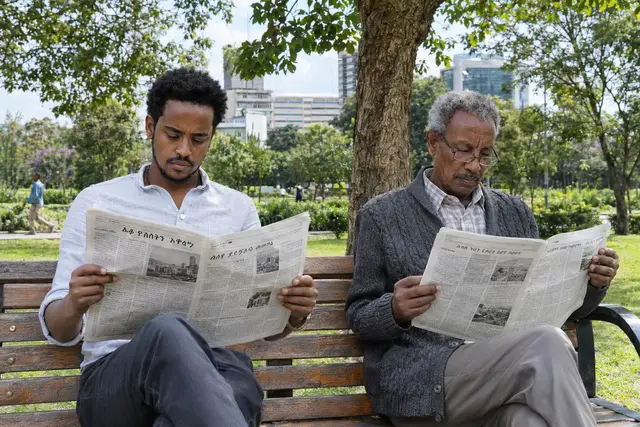
An Ethiopia sport newspaper is a printed or online publication that reports on football, athletics, the marathon and other competitions at home and abroad. Some titles are devoted to sport alone, while many readers find sport pages inside general weeklies and on news sites in Amharic, English and regional languages. The coverage includes match reports, league tables, race results, interviews, training features and commentary, and it reaches fans in Ethiopia and in the diaspora who follow clubs and champion runners.
Sport as national story
Sport occupies a special place in Ethiopian public life. The country's runners have won Olympic and world titles for more than six decades, and their names appear in school lessons, street murals and songs. When a marathon or a 10,000-metre race is run abroad, the result becomes the lead item the next morning, which is why sport coverage has such a loyal readership.
Abebe Bikila, who won the Olympic marathon in Rome in 1960 running barefoot and again in Tokyo in 1964, remains the symbol of this tradition. Later champions such as Haile Gebrselassie, Kenenisa Bekele, Tirunesh Dibaba and Derartu Tulu, the first black African woman to win an Olympic gold medal, extended it, and each generation of reporters has retold their stories.
The place of a specialised sport paper
A dedicated sport title gives space that general papers cannot afford. It can publish match reports, league tables, interviews with coaches and players, and technical articles on training, nutrition and injury prevention. Because many readers are fans of a particular club, such a title builds loyalty through detailed coverage of local fixtures.
In Ethiopia, the specialised press for sport has remained small and fragile compared with general weeklies. Many sport pages are therefore found in the general papers: Capital has a Sports heading on its website and The Reporter lists Sport among its main sections, while the Ethiopian News Agency publishes sport news on its English site.
Football coverage
Football is the most followed team sport. The domestic league brings together clubs from Addis Ababa and regional cities, and fans follow rivalries with passion. The national team, nicknamed the Walias after the ibex of the Simien mountains, is covered closely during qualifying campaigns for the Africa Cup of Nations and the World Cup.
Reports typically include line-ups, scorers, standings and short comments from coaches. A good paper also discusses refereeing, club finances, youth development and the state of stadiums, topics that matter to supporters between matches.
Athletics and the marathon tradition
Athletics is where Ethiopia's reputation is built. Newspapers report on the national trials, the races of the Diamond League, the world marathon majors and the Olympic Games. Reports often explain times in minutes and seconds and compare them with national and world records.
Domestic races attract large crowds. The Great Ethiopian Run in Addis Ababa, held every year, welcomes thousands of participants of all ages, and papers publish routes, start times and results. Coverage of training camps at altitude, in places such as the hills around the capital, provides background that readers enjoy.
Women, youth and school sport
Women athletes have drawn growing attention since Derartu Tulu's gold in Barcelona in 1992. Reports now follow women's football, track events and marathons more closely, and interviews with female runners from rural areas show how sport can change lives. Youth academies and school competitions supply the next generation, and local pages announce selection days and regional meetings.
School sport often depends on teachers and parents. Papers that cover inter-school contests give young players their first public recognition, which can matter for scholarships and for selection into club teams.
Fans, rivalries and the culture of debate
Supporters discuss matches in cafés and on call-in programmes, and newspapers feed these debates with columns and statistics. Rivalries between clubs of the capital have long histories, and derby days fill stadiums and sport pages. Letters to the editor and online comments show how passionate the audience is.
The tone of reporting reflects this culture. Headlines can be dramatic, and columnists sometimes mix analysis with humour. A reader who enjoys the debate should still separate facts, such as scores and dates, from opinions about tactics.
A short history of sport journalism
Sport reporting grew with the press itself. State papers carried results and official announcements for decades, and with the arrival of private weeklies in the 1990s, sport columns became more critical and personal. The spread of radio and television commentary brought in new styles, and websites now offer instant reports.
Journalists who cover sport often start in general newsrooms and specialise through interest. Training in journalism schools increasingly includes modules on sport reporting, ethics and data.
Other sports and local competitions
Cycling, basketball, volleyball, boxing, table tennis and swimming each have followers, and regional or school tournaments receive attention in local pages. Para-athletics and women's competitions have gained more space as athletes win medals and reporters recognise their audiences.
The reports often rely on federations for results. A reader should note that scores and times may be corrected after publication, and that official federation announcements are the final word on records and eligibility.
Languages and formats
Sport coverage appears in Amharic, English and regional languages. Amharic commentary on radio and television has a strong influence on vocabulary, and written reports echo its style. English-language pages cater to foreign readers and to the diaspora who follow clubs and runners from abroad.
Formats include match reports, interviews, columns, photo galleries and short bulletins. Online sites add video highlights and social media posts, though printed weeklies still publish extended features and weekend previews.
How to find sport news today
The simplest route is to open the sport section of a general news site. The English edition of the Ethiopian News Agency has a sport category, and private weeklies maintain sections for games and athletes. Federations and clubs also post results on their own pages and social media accounts.
For older reports, the starting point is the paper's own archive, followed by library collections. Searching by the name of an athlete, a race and a year narrows the results quickly, and checking two papers for the same event helps to confirm times and scores.
Reading sport reports critically
Sport journalism can be partisan. A report written by a supporter of a club may exaggerate a refereeing decision, and statements about transfers or injuries are sometimes based on rumours. Look for named sources, quotes from officials and statistics that can be verified.
Health claims about training or diets deserve careful reading. A newspaper article is not a substitute for medical advice, and young athletes should rely on qualified coaches and doctors.
Doping, governance and sports journalism
International sport federations have investigated doping cases across many countries, and Ethiopian sport has also faced questions of governance, funding and selection. Responsible reporting presents allegations carefully, distinguishes between suspicion and a ruling, and gives the athlete or the federation a chance to respond.
Journalists who cover disputes about team selection or the use of funds need access to documents and officials, which is not always easy. As a result, much reporting follows official statements, and investigative work is rarer.
Sport and the Ethiopian press landscape
State media promote national teams and major events, while private weeklies offer commentary and critique. Radio and television carry live matches, and newspapers provide the next-day analysis. The balance between them shapes how fans experience sport.
A reader who wants a full picture should combine sources: a state dispatch for official results, a private weekly for debate, and a federation page for rules and fixtures.